
Church Security Guide: How to Protect Your House of Worship

Updated: 3 days ago
A church or house of worship should build its security plan around a written risk assessment, trained greeters and volunteers, controlled entry during services, good lighting and cameras, and, where the risk justifies it, a licensed security guard during services and events. California nonprofits can also apply for state grants of up to $250,000 per site to pay for security upgrades.
Key takeaways
Start with a written risk assessment of your buildings, parking areas, services and events.
Greeters, ushers and a small safety team are the first line of security for most congregations.
California Penal Code section 302 makes it a misdemeanor to intentionally disturb a religious gathering.
The California State Nonprofit Security Grant Program (CSNSGP) awarded $76 million to 343 nonprofits in its 2025-26 round, with up to $250,000 per site, according to Cal OES.
A licensed, uniformed guard is worth considering for large services, holidays, events and properties with past incidents.
Security should feel welcoming, not like a checkpoint.
Why do churches need a security plan?
Churches need a security plan because they are open, welcoming places that host large crowds at predictable times, often with cash collections, children's programs and parking lots that empty late at night. A written plan helps leaders prevent theft and vandalism, respond calmly to disruptions and medical emergencies, and protect people without changing the welcoming feel of the congregation.
Common concerns for houses of worship include:
Break-ins and theft of equipment, instruments and donation boxes.
Vehicle break-ins in parking lots during services.
Vandalism and graffiti.
Disruptive visitors during services.
Medical emergencies in large crowds.
Safety of children during classes and childcare.
In October 2026, we wrote about a Claremont church burglary and car break-ins, a reminder that property crime affects congregations across the San Gabriel Valley.
What should a church security plan include?
A church security plan should include a risk assessment, clear roles for staff and volunteers, entry and door procedures, child safety rules, emergency steps for fire, medical and disruptive-person situations, and a way to report and log incidents. Keep it short enough that volunteers will actually read it, and review it every year.
Core parts of the plan
Risk assessment: Walk the property and note entrances, blind spots, lighting and past incidents.
Roles: Name a safety lead, greeters, ushers and a person who calls 911.
Doors and entry: Decide which doors stay open during services and who locks them.
Children's areas: Check-in and check-out rules, with trained and screened volunteers.
Emergencies: Steps for fire, medical events, severe weather and disruptive behavior.
Communication: Radios or a group call list for the safety team.
Reporting: An incident log and a process to share it with leadership.
How can churches keep security welcoming?
Churches keep security welcoming by making greeters the face of the plan, training them to notice and gently engage, and keeping any guard in a friendly, customer-service role. Most visitors should experience security as a warm hello at the door, good lighting and a well-kept parking lot, not as bag checks or barriers.
Tips that balance safety and hospitality:
Station greeters at every open entrance, especially after the service starts.
Train greeters to notice behavior, not appearance.
Close side doors once services begin and point latecomers to the main entrance.
Use friendly signs to guide visitors to the right entrance.
Brief guards on the congregation's culture and expectations.
Can a church get grant money for security?
Yes. California nonprofits, including churches and other houses of worship, can apply for the California State Nonprofit Security Grant Program (CSNSGP), run by the California Governor's Office of Emergency Services (Cal OES). In the 2025-26 round, Cal OES awarded $76 million to 343 nonprofits, with up to $250,000 per site for up to two sites.
According to Cal OES, the program helps nonprofits at risk of violent attacks and hate crimes pay for physical security upgrades and related training. The project period for the 2025-26 awards runs from March 1, 2026, to December 31, 2027. Check the Cal OES website for current eligibility rules and future application dates, since each round has its own deadlines. There is also a federal Nonprofit Security Grant Program administered through the state.
Grant-funded projects often include:
| Project type | Examples | |---|---| | Physical upgrades | Lighting, fencing, gates, door hardware | | Technology | Cameras, alarm systems, access control | | Training | Active threat and emergency response training | | Planning | Vulnerability assessments and security plans |
Ask your grant advisor which costs are allowed in each round before you buy anything.
When should a church hire a security guard?
A church should consider a licensed security guard for large services, holidays, festivals and special events, and whenever there have been recent incidents, disruptive visitors or parking lot crime. A guard adds a trained, uniformed presence that frees volunteers to focus on hospitality, and provides written reports that help leaders track problems.
Signs it is time to add a guard:
Repeat break-ins, vandalism or vehicle crime.
Services or events with hundreds of attendees.
Late-night activities with an empty parking lot.
Volunteers who feel stretched or unsafe.
Insurance or leadership recommendations.
Most congregations choose unarmed security guards who focus on deterrence, customer service and reporting. For festivals, concerts and holiday services, event security can add crowd and parking support.
What should churches in San Gabriel do next?
Churches in San Gabriel and nearby cities should start with a walk-through of their property at service times and after dark, then write a simple plan, train greeters and decide whether events or services need a guard. Congregations that qualify can also review Cal OES grant rounds to help fund upgrades.
Next steps:
Schedule a walk-through with leaders and volunteers.
Write or update the safety plan.
Train greeters and the safety team.
Review lighting, doors and cameras.
Get a quote for guard coverage at your busiest services. See our security services in San Gabriel.
Frequently asked questions
Is it a crime to disrupt a church service in California?
Yes. Penal Code section 302 makes it a misdemeanor to intentionally disturb people gathered for religious worship through rude or indecent behavior, profane speech or unnecessary noise.
Can churches apply for security grants in California?
Yes. Nonprofits, including houses of worship, can apply for the California State Nonprofit Security Grant Program through Cal OES when a funding round is open.
How much can a church get from the state security grant?
In the 2025-26 round, eligible nonprofits could receive up to $250,000 per site, for up to two sites.
Do church security volunteers need training?
Training is strongly recommended. Volunteers should know the safety plan, emergency steps, how to call 911 and how to engage visitors calmly.
Should a church guard be armed or unarmed?
Most churches choose unarmed guards. Armed coverage is a separate decision based on specific risks, and leaders should discuss it carefully with their security provider.
About the author
Samantha Stephens leads SGV Patrol, a security company serving the San Gabriel Valley since 2012. SGV Patrol is Licensed, BSIS PPO #17353. You can verify our license on the California DCA license search.
Get a church security plan in San Gabriel
Want a safer, still welcoming campus? Call SGV Patrol at (626) 727-1592 for a security assessment. Calls are answered 24/7.
Sources: California Governor's Office of Emergency Services (Cal OES), California State Nonprofit Security Grant Program 2025-26 award announcement; California Penal Code section 302. This post is general information, not legal advice.
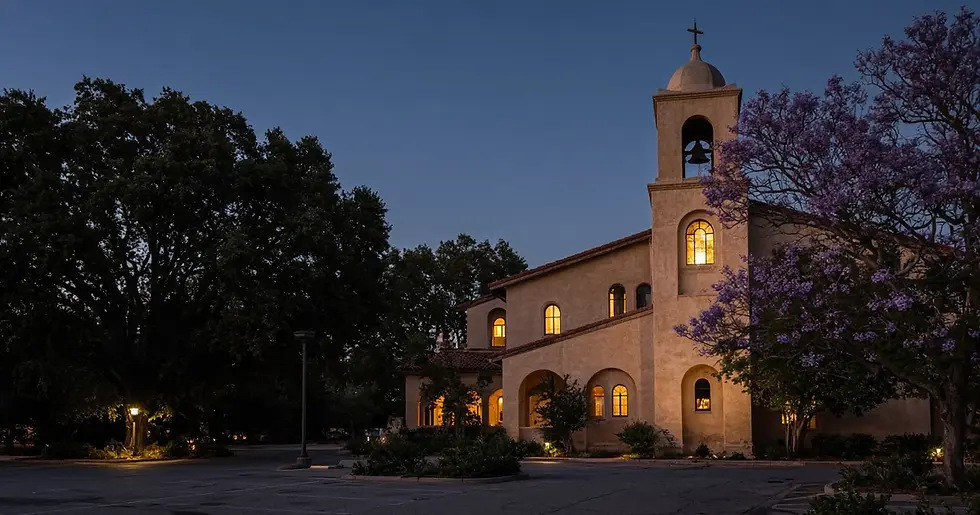
Cover photo: "Mission San Gabriel 4-15-05 6611" by Robert A. Estremo, via Wikimedia Commons, licensed CC BY-SA 2.0.

Comments