
Jewelry Store Security: Guards, Cases and Closing Routines That Cut Risk

Jewelry store security works best in layers: strong display cases and a safe, controlled entry, cameras that capture faces, strict opening and closing routines, and a trained security officer when the risk calls for one. Most losses happen at predictable moments, such as opening, closing, busy weekends and deliveries, so a good plan focuses there first.
Key takeaways
Jewelry stores carry high value in a small space, so thieves target them for smash-and-grab theft, distraction theft, burglary and robbery.
The riskiest moments are opening, closing, deliveries, busy weekends and holiday rushes.
California's organized retail theft law (Penal Code section 490.4) applies to groups working together to steal merchandise for resale.
Armed security officers in California must hold a BSIS guard registration plus a BSIS firearms permit; unarmed officers need the guard registration.
A written plan, tested routines and clear post orders matter more than any single camera or lock.
What security does a jewelry store need?
A jewelry store needs security that slows down theft, records evidence and protects staff. That usually means laminated or reinforced display cases, a rated safe, controlled entry, cameras covering doors, counters and the safe area, a monitored alarm with hold-up buttons, and written opening and closing routines. Many stores add a uniformed officer during busy hours.
Think of it as three goals:
Delay. Make every step of a theft take longer, from breaking a case to opening the safe.
Detect. Know right away when something is wrong, through alarms, cameras and alert staff.
Document. Capture clear images and records that help police and insurers.
When is a jewelry store most at risk?
A jewelry store is most at risk when cash and merchandise are moving or when staff attention is split. Opening and closing, when cases are being stocked or emptied and the safe is open, are the top risk windows. Busy weekends, holiday sales and delivery times add risk because staff are stretched and doors open more often.
High-value goods are also at risk in transit. In November 2026, Pasadena Now reported that a Pasadena man agreed to plead guilty to a federal charge in the case tied to the 2022 theft of jewelry from a Brinks truck after a San Mateo jewelry show, which federal prosecutors have called the largest jewelry heist in U.S. history. The lesson for store owners is that shows, transfers and deliveries need planning too.
Should a jewelry store hire armed or unarmed security?
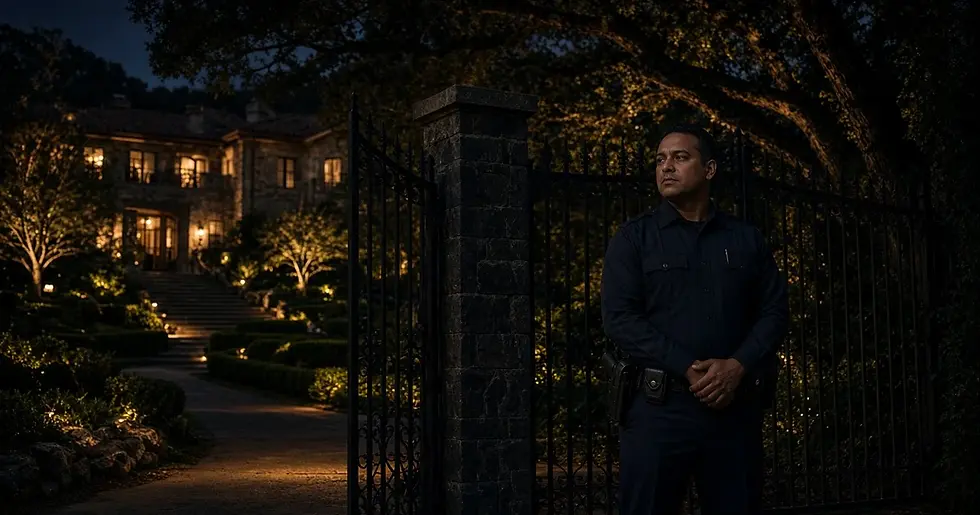
The right choice depends on the store's location, hours, inventory value, past incidents and what its insurer requires. Unarmed officers deter theft and handle customer contact well. Armed officers may make sense where robbery risk is higher. Either way, the officer needs clear post orders and must follow California law on use of force.
| Factor | Unarmed officer | Armed officer | |---|---|---| | Main role | Visible deterrence, customer contact, door control, reporting | Same, plus a higher-level response to serious threats | | California license needed | BSIS guard registration (guard card) | BSIS guard registration plus a BSIS firearms permit | | Typical fit | Mall kiosks, lower-value inventory, daytime hours | High-value inventory, past robberies, cash-heavy operations | | Cost | Lower hourly rate | Higher hourly rate due to added training and permits |
Our guide to armed vs. unarmed security guards walks through this decision in more detail, and our armed guard services page explains how armed posts work.
What should a jewelry store's opening and closing routine include?
A strong opening and closing routine uses two people, follows the same written steps every day, and keeps the door locked until the store is ready. Staff check the outside for anyone waiting, enter together, disarm the alarm, scan the store, then open the safe and stock cases. Closing reverses those steps.
A simple routine:
Look before you unlock. Scan the parking lot and doorway for people or vehicles that seem out of place.
Use a two-person rule. One person enters while the other watches; switch roles if your plan allows.
Keep the door locked until cases are stocked and staff are in position.
Limit safe time. Open the safe only as long as needed, out of view of the front windows.
Use a code word. Agree on a word staff can say if something feels wrong.
Close in reverse. Empty cases into the safe before the last customer leaves the area, then lock the door and set the alarm.
A security officer can stand at the entrance during these windows, watch the lot and keep the door controlled.
How can staff spot distraction and smash-and-grab theft?
Staff spot distraction theft by watching for groups that split up, ask to see several items at once or create noise at one counter while another person drifts to a different case. Smash-and-grab crews often arrive together, cover their faces and move fast. Training, limited items out at once and controlled entry reduce both.
Good habits include showing one item at a time, never leaving a tray unattended, keeping cases locked between customers and using a buzz-in door at higher-risk locations. Groups working together to steal for resale may fall under California's organized retail theft law, Penal Code section 490.4. For more on organized crews, see our post on organized retail theft prevention.
What should jewelry store owners check before hiring a security company?
Owners should check the company's BSIS private patrol operator license, ask how officers are trained, confirm each officer's guard card and any firearms permit, and review sample post orders and reports. The company should explain how it handles incidents and how it will work with your alarm and camera setup.
Questions to ask:
Is your PPO license current on the California DCA license search?
How do you verify guard cards and firearms permits for every officer?
What training do officers get for retail and high-value posts?
What does a shift report include, and how quickly will I receive it?
Who do I call when there is a problem at my store?
For Alhambra stores, see local coverage on our Alhambra security services page.
Frequently asked questions
Do jewelry stores need security guards?
Not every store does, but many benefit from one during busy hours, opening and closing, or holiday sales. The decision depends on inventory value, location, past incidents and insurer requirements.
What is the most common type of jewelry store theft?
It varies by store. Owners commonly deal with distraction theft, grab-and-run theft from the counter, smash-and-grab of display cases and after-hours burglary. A good plan addresses each one.
Can a security guard stop a robbery?
A guard's main value is deterrence, observation and fast reporting. Guards must follow California law on use of force, and staff safety should always come before merchandise.
What license does an armed security guard need in California?
An armed guard needs a BSIS guard registration plus a BSIS firearms permit, and must work for a licensed private patrol operator.
How can I verify a security company's license?
Search the company name or license number on the California Department of Consumer Affairs license search at search.dca.ca.gov.
About the author
Samantha Stephens leads SGV Patrol, a security company serving the San Gabriel Valley since 2012. SGV Patrol is Licensed, BSIS PPO #17353. You can verify our license on the California DCA license search.
Plan security for your jewelry store
Want a security plan built around your store's busiest and riskiest hours? Call SGV Patrol at (626) 727-1592 to request a security assessment or get a quote for armed or unarmed officers. Calls are answered 24/7.
Sources: California Penal Code section 490.4; California Bureau of Security and Investigative Services, guard registration and firearms permit requirements; Pasadena Now, "Pasadena Man to Plead Guilty to 'Largest Jewelry Heist in U.S. History,'" November 10, 2026.
Cover photo: "Oak Glen Harvest Time 11-10-12" by inkknife_2000, via Wikimedia Commons, licensed CC BY-SA 2.0.


Comments